Hezbollah's spike in attacks on Israel and IDF forces is likely not sustainable, but could be part of an effort to coerce Israel and the US into a ceasefire on all fronts.
Hezbollah has fired over 600 times on Israel andIDF troops in the last 24 hours, around double its prior high of around 300 aerial threats during the 2023-2024 conflict between the sides, IDF sources have confirmed.
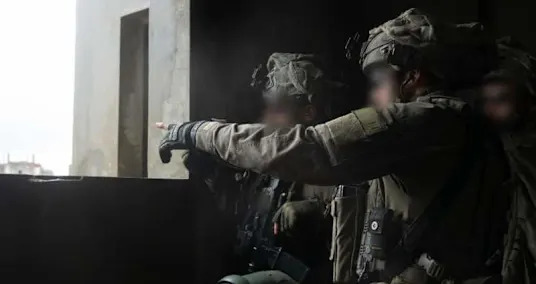
The vast majority of the rockets, mortars, and drones were launched at IDF forces holding positions in or seeking to advance within southern Lebanon.
This major spike in Hezbollah attacks, up from a general average of around 100 attacks per day during the current war, occurred in the shadow of a possible end to the Israel-Iran war.
Despite increased expectations of such a potential ceasefire, Israel has made noises that it may wish to continue pummeling Hezbollah with airstrikes as well as to continue its invasion of southern Lebanon.
Hezbollah's spike in attacks on Israel and IDF forces is likely not sustainable, but could be part of an effort to coerce Israel and the US into a ceasefire on all fronts, or to convince Israel to withdraw from southern Lebanon.

Spike in Hezbollah fire targets IDF in south Lebanon
Meanwhile, top Israeli political and military officials have increasingly publicly commented in recent days on the likelihood of Israel holding onto southern Lebanon up to the Litani River for some undefined period to try to force Hezbollah to disarm, something the terror group refused to do despite pressure from the Lebanese government since a fall 2024 prior ceasefire.
One reason Hezbollah may be succeeding in firing more could be due to the IDF's advancing deeper into southern Lebanon.
In other words, just as IDF forces penetrating farther into southern Lebanon make it harder for Hezbollah to fire on Israeli civilians by moving back many of the terror group's rocket crews to being out of range, it simultaneously makes those same IDF forces more vulnerable, because they are coming closer to being in range of Hezbollah's frontline positions.
LATEST POSTS
- 1
 Language Learning Stages: Which One Gets Your Vote?
 - 2Mating injuries may lead scientists to identify dinosaurs’ sex
- 3Flu concerns grow in US as UK sees more cases among kids
- 4Dozens injured in Russia after train crashes, overturns
- 5Nikki Glaser returns as host of the 2026 Golden Globes: Everything the comedian has said about the upcoming awards show




- Kelsey Grammer on having a new baby at 70: 'You're just more available now'
- Surveys of 6 Hot Savvy Beds
- German Easter peace marches draw tens of thousands
- The most effective method to Begin Your Excursion in Gold Venture
- New Cheetos and Doritos will be free of artificial dyes
- How many ships have been attacked in the Gulf since start of Iran war?
- Interpreter Starts Sobbing as 11-Year-Old Testifies About Last Time He Saw His Mom Before She Was Killed in Missile Strike
- Step by step instructions to Buy a Jeep Wrangler on a Senior's Spending plan
- Figure out How to Use the Experience of a Fender bender Legal counselor for Your Potential benefit