The Chinese government is set to ban people from storing the cremated remains of their loved ones in empty apartments instead of paying for expensive cemetery plots.
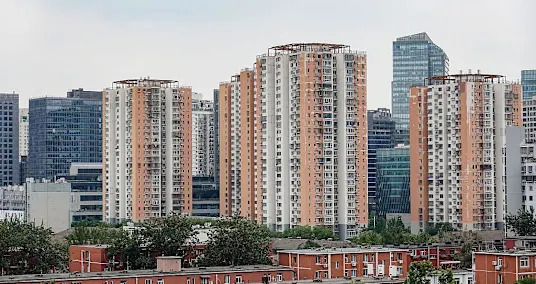
The new law will put an end to "bone ash apartments", which have risen in popularity as spaces in cemeteries remain scarce.
Low property prices in the country mean that for many, it is more affordable to entomb the ashes of relatives in an empty apartment than pay for funeral costs.
The legislation prohibits the use of residential properties "specifically for the placement of ashes" as well as the burial of remains outside of cemeteries and areas where ecological burial is legal.
Bone ash apartments are empty properties which are turned into ritual halls by family members of the deceased. Their loved one's ashes are placed inside and the space turned into an ancestral shrine.
The apartments are often identifiable by closed curtains or sealed-off windows, Chinese media has reported.
Mourners are making the most of low property prices, which have fallen in China in recent years and were down 40% in 2025 from 2021.
Meanwhile, cemetery spaces are limited and only come with a temporary lease which must be renewed every 20 years.
The price for a burial plot in Beijing's Changping Tianshou Cemetery ranges from around 10,000 yuan (£1,095) to 200,000 yuan (£21,917), according to its website. The cheaper options are "eco-friendly burial plots".
A standard tombstone plot starts at about 150,000 yuan (£16,400), with prices rising to 300,000 yuan (£32,841), which the website notes is "relatively high" in Beijing.
The price of funerals is also high. In 2020, funerals cost nearly half of the country's average annual salary, according to a survey by British insurance firm SunLife.
On social media, commentators have pointed out the cost of cemetery plots and queried how the new law will be regulated. One person wrote on Weibo, China's equivalent of X: "Who would resort to this if cemetery plots were affordable?"
Another said: "How will those enforcing these rules know if the apartments are being used just to store ashes? And how will they deal with those cases?"
The ban comes days before the Qingming Festival, also known as Tomb Sweeping Day, where people tidy the graves of loved ones and make ritual offerings.
On Tuesday, the State Administration for Market Regulation and the Ministry of Civil Affairs laid out new requirements for the funeral industry following concerns over high costs.
It said it would introduce new rules to tackle fraud and a lack of transparency in funeral pricing to "reduce the burden of funerals on the masses".
LATEST POSTS
- 1
 Tanzania president remorseful over internet shutdown on election day
 - 2Australian State Triggers Emergency Powers Amid Fuel Crisis
- 3Viable Tips for Seniors to Purchase a Minimal expense Jeep Wrangler
- 46 Novice Cameras for 2024: Ideal for New Picture takers
- 5IDF continues counterterrorism operations in Gaza Strip, including destroying terror tunnels



- Mojtaba Khamenei unconscious in Qom, not actually running Iran
- Home Machine Basics: An Exhaustive Purchasing Guide
- A Sweet Choice: Pick Your #1 Cake!
- Step by step instructions to Pick the Right Dental specialist for Your Teeth Substitution
- What to watch for in weight loss drugs in 2026
- Pick Your Favored kind of books
- Investigate the Excellence of Professional flowerbeds: A Virtual Local escort
- 2026 Golden Globes live updates: Red carpet arrivals will kick off the night; Nikki Glaser set to host
- Environmental groups urge Germany to cut oil and gas dependence