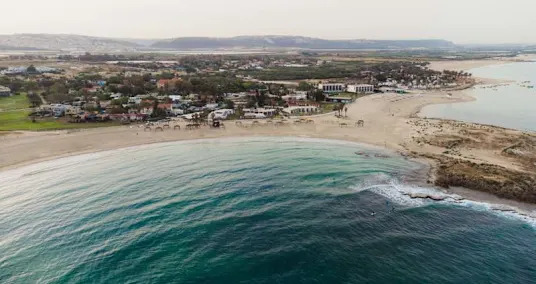
The discovery was made in an ancient shipwreck in the Dor Lagoon near the Carmel Coast, where archaeologists recovered nine pieces of unprocessed iron known as “blooms.”
Researchers from the University of Haifa said Wednesday that an underwater excavation off Israel’s northern Mediterranean coast uncovered what they described as the earliest known cargo of raw iron transported by ship, dating back around 2,600 years, Xinhua reported.
The discovery was made in an ancient shipwreck in the Dor Lagoon near the Carmel Coast, where archaeologists recovered nine pieces of unprocessed iron known as “blooms.” According to the university, the find provides direct evidence of how iron was transported in its earliest commercial stages.
The material was preserved in its original form, having solidified directly in a smelting furnace without undergoing forging or further refinement. Researchers said this distinguishes the cargo from later iron artifacts that typically show signs of shaping or tool-making.
Unlike copper and bronze, which could be melted into liquid form in ancient production processes, iron was heated with charcoal to produce a solid, porous mass. That mass was generally hammered to remove impurities and create denser material suitable for tools and implements.
The recovered blooms showed no indication of that secondary processing stage, suggesting they were transported immediately after production.

Earliest iron shipment discovered in ancient Mediterranean wreck
To determine the age and condition of the cargo, researchers conducted microscopic and chemical analyses.
Radiocarbon dating was also carried out on charred wood embedded in one of the pieces, helping confirm the timeline of the shipment. The findings were published in the journal Heritage Science.
Researchers said the cargo indicates that iron was being moved in raw form from production sites to other locations for further processing, pointing to a level of specialization in ancient manufacturing and trade networks in the Mediterranean.
The University of Haifa said the discovery provides new insight into early iron production and distribution practices in the region.
LATEST POSTS
- 1
 Fire Allegedly Triggered by Wedding Cake Sparkler Causes Venue to Go Up in Flames, Leaving Groom with Second-Degree Burns
 - 2Artemis II astronauts are more than halfway to the moon as they seek to break Apollo 13's record
- 3South African army arrive in crime hotspots to help tackle gangs
- 4Eight arrested in joint Scotland and Spain gang raids
- 5France bans Muslim gathering citing risk to participants





- 'Every day I planned an escape': Ariel Cunio shares details of Hamas captivity
- France, Germany, Italy summon Iranian envoys over 'unbearable, inhumane' regime crackdown
- Lawsuit claims ChatGPT exacerbated man's delusions leading to murder-suicide
- Vote in favor of Your #1 4\u00d74 SUVs
- Instructions to Pick the Ideal SUV Size for Seniors
- Spanish woman, 25, dies by legal euthanasia in case that drew national spotlight
- Instructions to Floss Appropriately and Forestall Gum Sickness
- Three arrested in Paris after attempted bomb attack outside Bank of America
- Your big brain makes you human – count your neurons when you count your blessings